
What is Chainlink? Exploring the Oracle Network and its LINK token
Chainlink is a popular decentralized oracle network that connects blockchain smart contracts to real-world data, creating a foundation for applications in decentralized finance (DeFi), gaming, and enterprise solutions, all powered by its native LINK token.
Understanding Chainlink: How the Oracle Network and LINK Token Work
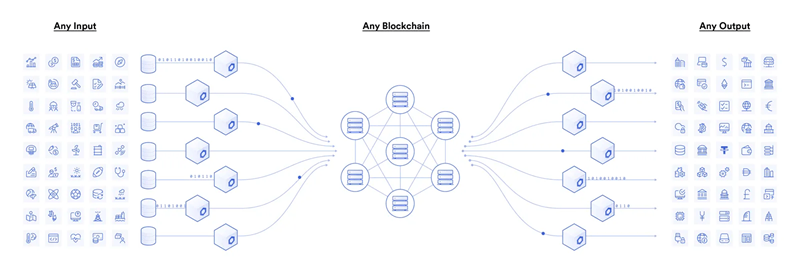
Blockchain technology has revolutionized the way smart contracts are managed through automation systems, but these contracts cannot automatically access real-world data. Chainlink solves this problem by connecting blockchains to off-chain data sources such as APIs, payment systems, and other databases.
How does Chainlink work?
A blockchain oracle network acts as a bridge between the blockchain and real-world actions. Oracles, data fetching and validating tools, ensure that smart contracts operate accurately and reliably. Chainlink’s decentralized network minimizes the risk of centralization and single points of failure, providing the foundation for highly stable blockchain applications.
Chainlink’s Architecture and Technology
Chainlink’s decentralized network (DON) relies on thousands of independent node operators, fetching and validating data from off-chain sources. The process involves multiple steps: nodes search for the required data, then aggregate it to filter out discrepancies and securely deliver the information to the blockchain. Node operators’ reputations are assessed over time, with those with accurate and reliable results rewarded, while those who fail are penalized.
Chainlink’s technology also includes Hybrid Smart Contracts, which combine on-chain and off-chain computation. For example, Verifiable Random Function (VRF) generates tamper-proof randomness for games, and Chainlink Automation helps trigger smart contracts under certain conditions.
LINK Token
LINK is Chainlink's core cryptocurrency, used to pay node operators and as collateral in the staking mechanism. Node operators stake LINK to participate in the network, and risk losing their stake in case of fraudulent behavior, ensuring the integrity and security of the network.
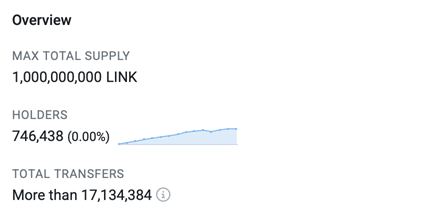
The supply of LINK is 1 billion tokens, with 35% issued during the ICO in 2017. The rest is used to support the development of the ecosystem and incentivize partners. LINK also plays an important role in enhancing liquidity, as well as staking rewards and speculative trading.
Chainlink’s Real-World Use Cases
As of 2025, Chainlink has integrated with over 2,100 projects, providing data to DeFi protocols like Aave and Synthetix. Chainlink also powers claims automation insurance platforms, games, NFTs, and many traditional institutions like SWIFT and Deutsche Telekom have partnered with Chainlink to increase interoperability across blockchains.
Chainlink also offers Proof of Reserve to increase transparency for collateral assets like stablecoins. Furthermore, Chainlink’s Cross-Chain Interoperability Protocol (CCIP) enables seamless data communication between blockchains, cementing its position in the multi-chain ecosystem.
Challenges and Competition
While Chainlink holds the lead, it still faces challenges. Reliance on independently operated nodes can be risky in the event of collusion or technical failure. Competitors like Band Protocol and API3 are also developing alternative oracle solutions, but Chainlink still maintains an advantage due to its history and reputation.
Future Outlook
Chainlink’s roadmap focuses on increasing cross-chain interoperability through CCIP and improving its staking mechanism. The protocol also aims to support data from more diverse sources such as IoT and identity verification. As blockchains become more popular, Chainlink has the potential to become a pillar in expanding the usefulness of smart contracts.
History and Founders
Chainlink was co-founded in 2014 by Sergey Nazarov and Steve Ellis, starting with the platform smartcontract.com. They recognized the limitations of centralized oracles and then moved towards decentralization with Chainlink, which was funded by a $32 million ICO in 2017 and launched its mainnet in 2019. Partnerships with Google, Oracle, Microsoft, and strategic acquisitions have helped Chainlink continue to thrive.