
Washington and Beijing Get Closer? Tariff Easing Sparks Hope for US-China Relations
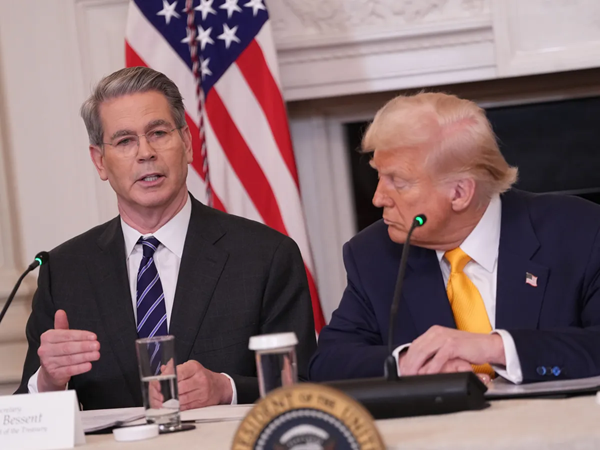
Amid years of trade tensions between the world's two largest economies, US President Donald Trump has raised expectations of a positive turn by hinting at the possibility of "substantially reducing" current tariffs on Chinese goods. The statement, made at a press conference earlier this week, immediately had a strong impact on global financial markets, bringing with it expectations of a "thaw" in US-China relations.
Currently, Washington is applying tariffs of up to 145% on many imported goods from China, as part of an effort to narrow the trade deficit and respond to policies that the Trump administration considers unfair. In response, Beijing imposed tariffs of up to 125% on US goods, escalating tensions into a full-scale tariff war.
The signal from the White House, however, was different this time. “We’re going to be cutting tariffs substantially — not to zero, but very substantially,” Trump said. He also revealed that upcoming trade talks with China would be “very good” and constructive.
The comments sparked an immediate positive reaction from markets. All four major US stock indexes posted significant gains, while the cryptocurrency market jumped 3% in just 24 hours. US Treasury bonds also benefited: 30-year bond futures are currently trading at 115.03, up 1.27%, while the 10-year yield is down to 4.33%.
US Treasury Secretary Scott Bessent added to the optimism, telling an investment summit hosted by JPMorgan that he sees “a de-escalation with China taking shape.” Without giving details, Bessent said the government is preparing for “a realistic negotiation path, with the goal of achieving mutual benefit.”
Meanwhile, gold prices – a traditional safe-haven asset – fell 2.7% to $3,289 an ounce, indicating that market sentiment has shifted from defensive to opportunistic.
Still, many experts remain cautious. “The positive statements are welcome, but investors are still looking for concrete evidence of long-term commitment from both sides,” said Caroline Yuen, a financial analyst at Wells Fargo. “We have seen many rounds of negotiations in the past that were full of expectations and ended without any clarity.”
Still, there is no denying that the recent move by the Trump administration has changed the mood somewhat. In a context of geopolitical and global economic uncertainty, any sign of cooperation between the two superpowers is seen as positive.
If the upcoming negotiations can produce a more stable and fair trade framework, it would be a win for not just Washington or Beijing – but good news for the global economy as a whole.