
US and EU Accelerate Coordination: Towards Global Alignment in Cryptocurrency Policy
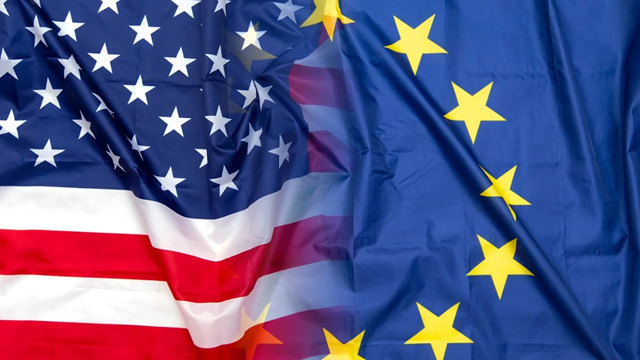
The rapid growth of digital asset markets is fueling an unprecedented wave of policy coordination among major economies. In a significant step, the United States and the European Union have stepped up transatlantic cooperation on cryptocurrencies, stablecoins, and central bank digital currencies (CBDCs). This dialogue not only reflects the growing priority of policymakers on the digital asset ecosystem, but also signals progress towards global regulatory alignment that could shape the future of the cryptocurrency industry.
EU-US Joint Financial Regulation Forum: Strengthening Communication and Cooperation
According to a statement released by the US Treasury on July 1, the EU-US Joint Financial Regulation Forum meeting, which took place on June 24–25 in Brussels, brought together leading financial regulators from both sides of the Atlantic to discuss a range of topics, notably cryptocurrencies and digital payments.
At the forum, the EU provided an update on the implementation of MiCA (Markets in Crypto-Assets), a key regulatory framework that is expected to establish transparency, governance and safety standards for cryptocurrency issuers and service providers in the bloc. At the same time, the EU highlighted its coordination with the Financial Stability Board (FSB) to assess potential risks from stablecoins and large-scale digital asset activities.
The United States, while not yet issuing a comprehensive regulatory framework like MiCA, also provided updates on its crypto policy priorities, including recent enforcement actions by the Securities and Exchange Commission (SEC) through its Digital Asset Task Force.
Central Bank Digital Currencies and Payments Modernization Efforts
Another central theme of the forum was the continued development of central bank digital currencies (CBDCs). The EU shared new developments in its testing and public consultation regarding a digital euro, while the United States remained cautious but is considering the possibility of developing a US dollar CBDC, given geopolitical competition and the need to modernize financial infrastructure.
The two sides also discussed initiatives to enhance cross-border payments, including the implementation of the G20 roadmap for improving global payments, which is seen as a pillar in reducing remittance costs, increasing processing speed, and expanding access to the international financial system.
Risk management, system security, and common legal corridors
An important part of the dialogue was cybersecurity governance and financial system resilience, especially in the context of increasing cyberattacks on exchanges and DeFi platforms. The EU presented progress on the implementation of the Digital Operations Resilience Act (DORA), a law aimed at standardizing security and technology oversight in the financial sector.
At the same time, the United States shared measures to improve supervisory capacity for cryptocurrency companies and storage infrastructure, focusing on data protection, operational transparency, and the ability to handle systemic risks.
While there remains a gap in approach between the two regions, with the EU prioritizing a comprehensive regulatory framework and the US leaning toward enforcing existing laws through federal agencies, the Forum has highlighted the role of policy harmonization and coordination as an essential element in controlling risks and promoting safe innovation.
Implications for the global crypto industry
The positive developments in US-EU relations on crypto could open a new chapter for cross-border regulation in the digital asset space. With increasingly interconnected markets, investors, businesses and developers are looking for a stable, clear and consistent regulatory framework across jurisdictions to minimize operational friction and risks.
US-EU coordination could also establish global standards for stablecoin oversight, blockchain security, and the operation of decentralized financial services (DeFi), thereby encouraging other countries to adhere to similar principles to maintain compatibility and avoid “regulatory migration.”
Conclusion: Towards a Global Framework for Digital Assets
The meeting between US and EU policymakers is a clear signal that the rapid maturation of the digital asset space is forcing countries to accelerate international regulation and cooperation. Despite differences in approach, common ground is emerging: digital assets cannot be ignored, and international coordination is necessary to control risks while maintaining the momentum of technological innovation.