
Platinum Price Surges: What's Causing the Precious Metal to Outperform Gold?
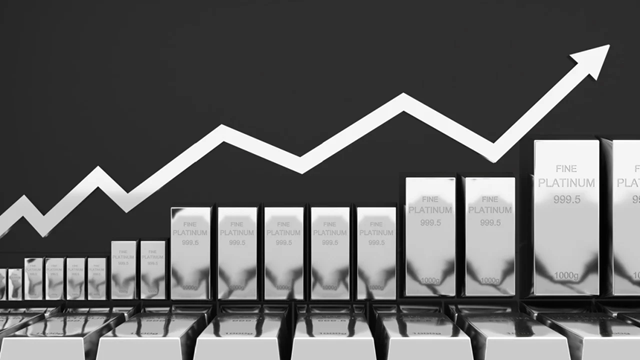
After being overshadowed by its metal sibling gold for a long time, platinum has made a spectacular breakthrough with a price increase of nearly 40% within a month, surpassing the $1,400/ounce threshold, its highest level in nearly 11 years. This unusual surge is attracting great attention from investors, analysts and global financial markets, as many people ask: what is really happening to platinum?
Tight Supply and Record Deficit
One of the main drivers of platinum prices is the severe tightening of global supply. According to the World Platinum Investment Council, the platinum market in 2025 is facing a deficit of about 1 million ounces, a significant figure for a metal with limited and highly concentrated mining production in some regions such as South Africa and Russia.
The deficit is coming from both sides: falling mining output and bottoming out global commercial inventories. This creates an ideal environment for platinum prices to surge as demand outstrips supply.
The return of jewelry demand, especially from Asia
While gold continues to set new highs in 2025, jewelry makers, especially in large markets like China, are looking for alternatives that offer similar aesthetic value but at lower costs. Platinum has emerged as an ideal candidate.
Yang Yang, deputy general manager of a major retailer at Shenzhen’s Shuibei jewelry market, said many gold factories are switching to platinum to take advantage of the growing consumer demand. However, she also stressed that the transition is not easy because platinum and gold require different processing techniques, especially with platinum’s hardness and metallic properties.
However, the shift is evident, leading to a sharp increase in physical demand for platinum in a short period of time, creating additional buying pressure on the market.
Purchasing power from the East and a new wave of investment
In addition to jewelry, investment demand for platinum is also increasing, mainly from Asia, where individual and institutional investors are looking for alternative assets in the context of economic instability and volatile stock markets.
Platinum, in the eyes of many investors, is not only a precious metal but also an asset that can be revalued compared to gold, especially when the gold/platinum price ratio is at an unusually high gap compared to history. This creates an attractive investment opportunity if the trend of narrowing this gap occurs.
Will platinum continue to rise?
While gold is supported by macro factors such as geopolitical uncertainty, monetary policy and central bank reserve demand, platinum is driven by physical market fundamentals and cyclical investment behavior.
Analysts say that if the supply shortage continues and demand from jewelry and industries, especially the automotive industry, where platinum is used in exhaust filters, remains strong, platinum prices could continue their upward trend.
Platinum’s recovery is also leading to renewed interest in other precious metals such as palladium and rhodium, which are also highly applicable and tend to move in similar cycles.
Conclusion
Platinum’s recent surge is the result of a “perfect storm” of limited supply, strong jewelry demand recovery in Asia, and a new wave of investment from the East. As the gold market slows down after a long rally, platinum emerges as a worthy alternative, both from an investment and consumer perspective.
However, like any other asset, investors need to be cautious of market volatility and closely monitor actual supply and demand developments to make appropriate decisions in the context of precious metals returning to the global spotlight.