
Bitcoin Adjusts Difficulty for First Time in Over Two Months, Bringing a 'Break' to Miners

After a string of four consecutive upward adjustments that began in March, the Bitcoin network has finally seen its first difficulty reduction in nearly two months, ushering in a period of temporary relief for miners worldwide. The latest 3.34% adjustment brought the difficulty index down from 123.23 trillion to 119.12 trillion at block 895,104.
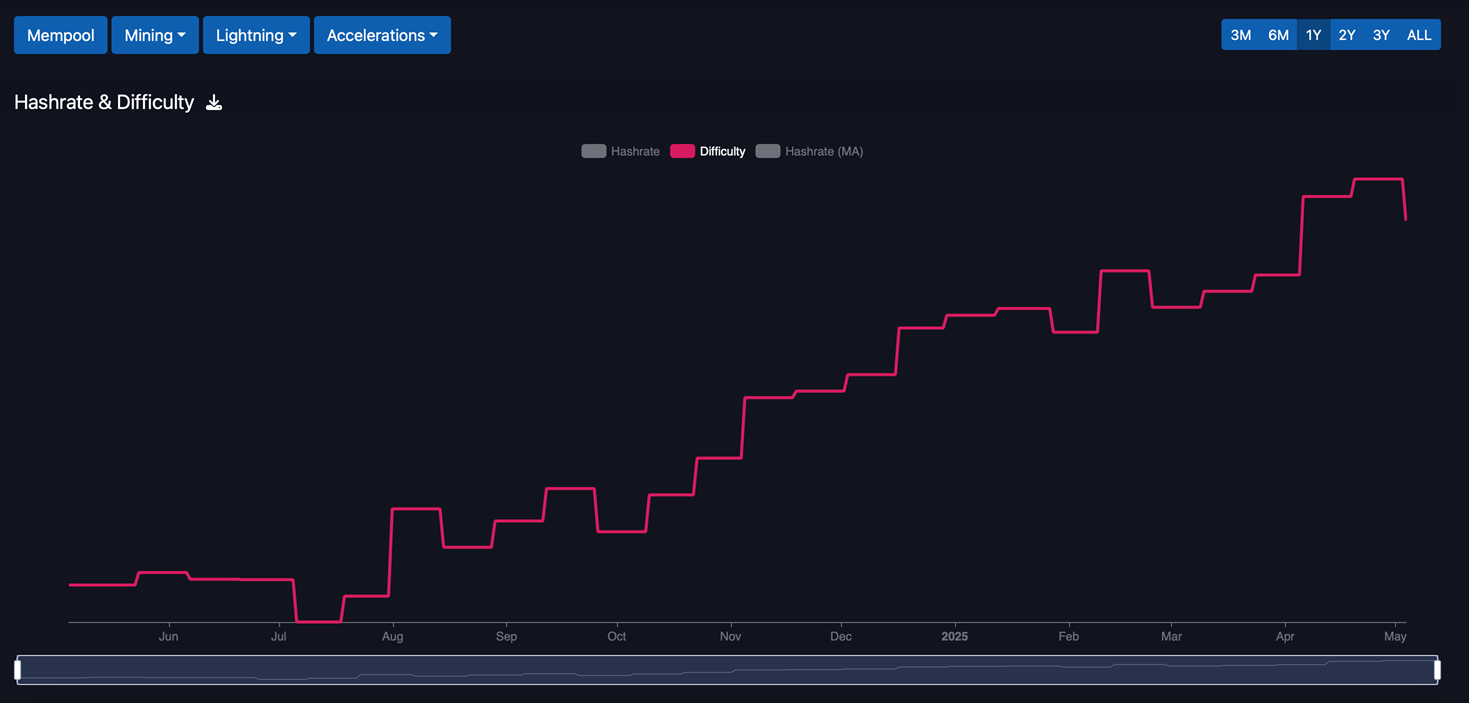
This is a significant milestone for the Bitcoin mining community, which has been operating at a high intensity amid fluctuating energy prices and equipment costs. The network difficulty is a dynamic index that is updated every 2,016 blocks (\~14 days) to ensure that the average time to mine a block remains stable at around 10 minutes. The difficulty reduction means that miners will need less computing power to solve the mining algorithm, increasing their chances of receiving a block reward.
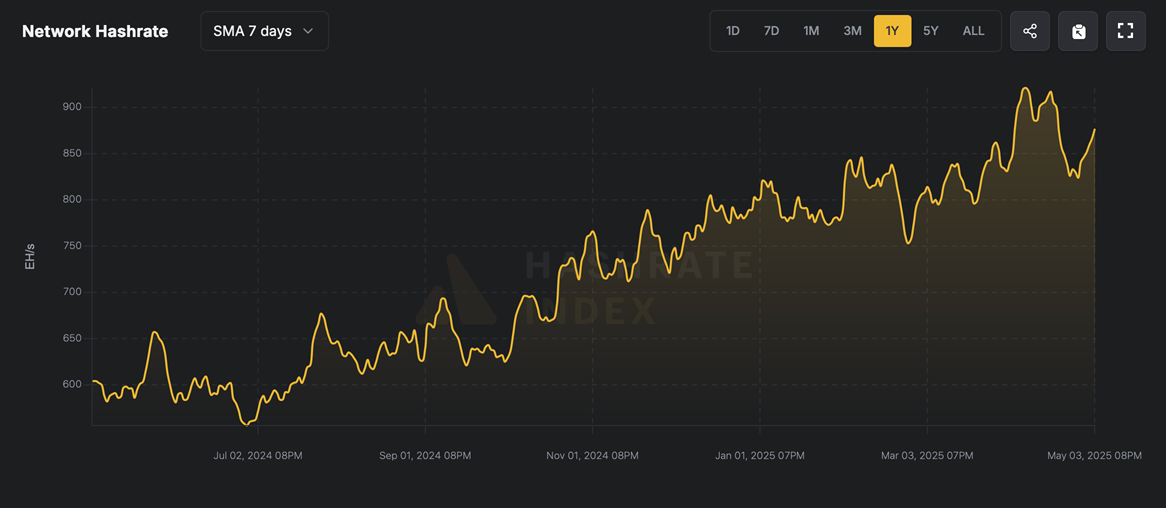
However, despite the difficulty adjustment, the average mining time remained higher than expected — around 10 minutes and 22 seconds — indicating that the overall network hash rate, while increasing, has not yet fully caught up to the network’s target block production pace.
As of May 4, 2025, the total network hash power had increased to 885.51 exahashes per second (EH/s), significantly higher than the 824 EH/s recorded at the end of April. This increase was supported by an improvement in miner revenue: the average hash price per petahash per second (PH/s) increased from $45.87 to $50.80 within a month.
If block production times continue to exceed the average threshold, experts predict that another difficulty adjustment could occur on May 18. However, this will depend largely on the overall network hashrate fluctuations — which can change rapidly according to Bitcoin price movements and global mining conditions.
This adjustment is seen as a temporary positive signal for miners, especially in the post-halving context, when the block reward has been cut in half. While some small mining facilities are struggling, large-scale organizations can take advantage of this period to optimize production and increase profits.